AI's $4.7 Trillion Profit Shift, and the Value Gap That Still Won't Close
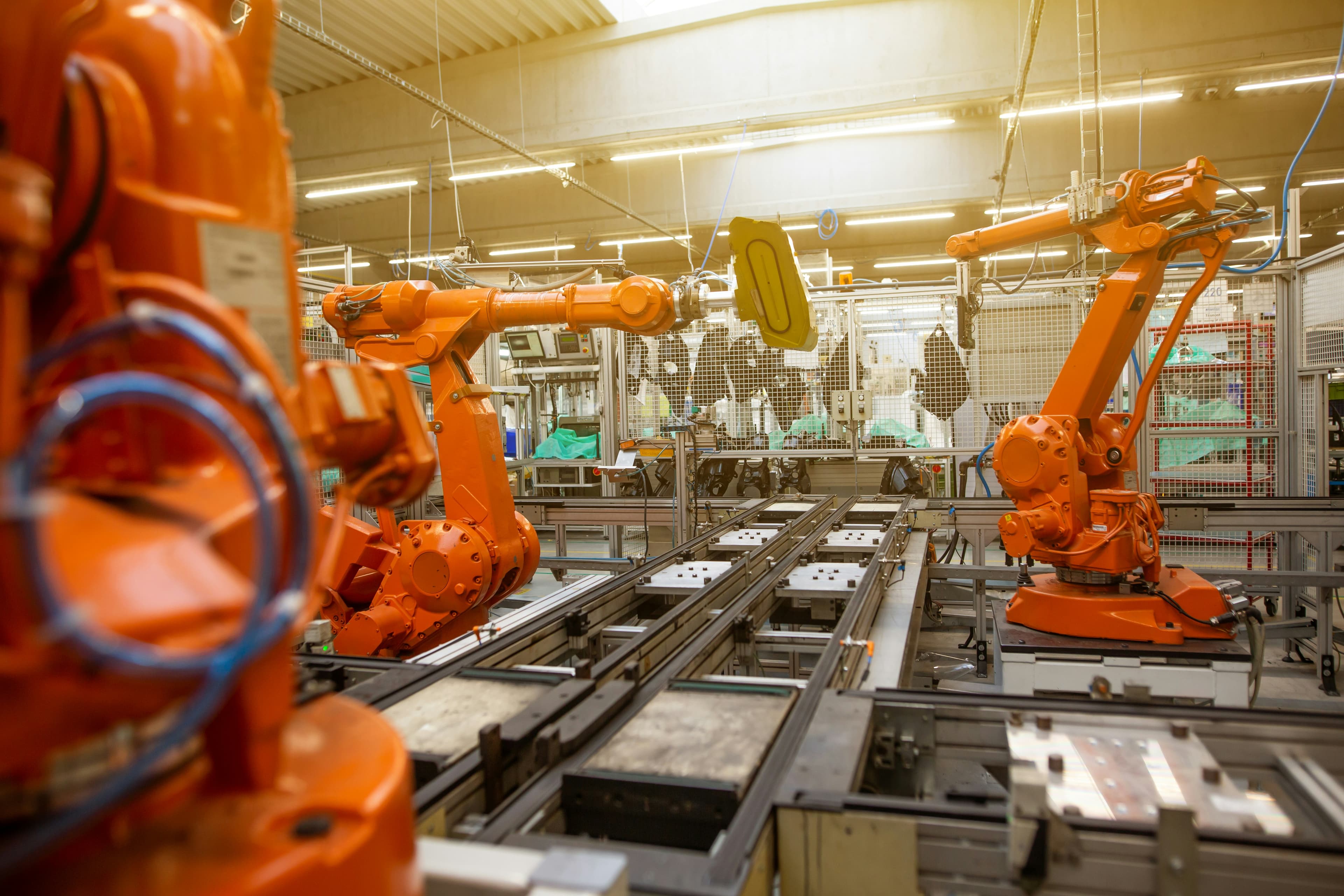
Photo: Simon Kadula on Unsplash
$4.7T
of global business profit is what Bain says AI will move by 2035: more than triple the internet's impact, across three times as many sectors, in half the time.
Read alongside EY's new supply chain survey: 73% of consumer products CEOs raised planned AI investment, but only 37% see measurable impact, and just 12% say that impact is tied to financial reporting and reviewed by senior management. Spend is up. Proof still isn't.
The week in three lines
- Bain puts a number on the whole game: AI will move $4.7 trillion of global business profit into play by 2035, over triple the internet's impact, across 71% of sectors, in half the time. EY's new consumer products survey shows the gap up close: 73% of CEOs raised AI investment, but only 12% say AI impact is tied to financial reporting that senior management reviews.
- Two firms independently raised the cost of getting workforce cuts wrong. Gartner predicts 30% of AI-driven layoffs will need rehiring by 2029, often at a significantly higher cost. That puts a hard number on the trade-off between cutting labour to fund AI and needing it back later. A 29-expert panel convened by MIT Sloan Management Review and BCG separately found 72% agreement that treating agents as autonomous decision-makers is a governance failure waiting to happen.
- McKinsey's operating-model survey found that 'reinventors', the 13% who redesign work rather than layer AI on top, are 20 points more likely to report faster decision cycles, and 48% report meaningful enterprise value against 13% for enablement-stage firms. It's a concrete test for whether an AI programme is redesigning work or simply adding tools to it.
The papers
AI will move $4.7 trillion of profit by 2035, and retail logistics must defend, not just adopt
Bain analysed 92 sectors to map how AI will redistribute $4.7 trillion of corporate profit through 2035, more than three times the internet's impact, in roughly half the time. Automotive, logistics and freight sit in Bain's highest-exposure cluster, where AI erodes existing advantage, while retail's near-term ceiling looks more like dynamic pricing and demand forecasting.
EY · Value gapEY: consumer products CEOs are raising AI investment, but only 12% say its impact reaches senior management review
EY surveyed more than 850 senior consumer products executives across 24 markets in early 2026. 73% of CEOs raised planned AI investment and 37% report measurable impact in supply chain and procurement, but just 12% say that impact is tied to financial reporting and regularly reviewed by senior management.
McKinsey Quarterly · Operating modelFirms that redesign work around AI outperform those that just add tools
A survey of more than 700 executives splits organisations into three horizons: enablement, automation and reinvention. Only 13% count as reinventors, but 48% of them report meaningful enterprise value against 24% for automation and 13% for enablement, and they report faster decision cycles than firms still adding tools to unchanged processes.
McKinsey Digital · CybersecurityThe gap between a vulnerability going public and being exploited has fallen from weeks to hours
McKinsey cites industry tracking showing the average time between a critical vulnerability's disclosure and active exploitation has fallen to a matter of hours, down from roughly three weeks in 2025, as frontier AI models can now generate working exploits at scale. Its diagnosis is organisational: no single function owns decision speed across IT, legal, procurement and security.
Gartner · Workforce30% of AI-driven layoffs will need to be rehired by 2029, at higher cost
Gartner's Hype Cycle for the Future of Work predicts that by 2029, 30% of employees laid off due to AI replacement will need to be rehired, often at a significantly higher cost, because workforce cuts made for short-term financial gain erode institutional knowledge and talent pipelines.
MIT Sloan Management Review / BCG · Governance72% of an expert panel say treating AI agents as accountable decision-makers is a governance failure
A panel of 29 international AI experts convened jointly by MIT Sloan Management Review and BCG rated agreement with the idea that governance treating agents as autonomous decision-makers will fail; 72% agreed. Their argument is that an agent's operational autonomy doesn't create legal or moral responsibility, so accountability has to sit with a named human.
Also published
- When AI Disruption Never Ends — MIT Sloan Management Review, 10 Sep 2026
An opinion piece on 'steady-state disruption' built around a narrative case study rather than primary data. Useful as framing, not as a finding.
- Gartner Unveils Top Strategic Predictions for 2027 and Beyond — Gartner, 15 Sep 2026
Ten forward predictions to 2030, delivered at Gartner's IT Symposium. This is Gartner's own house view of what is coming, not evidence of what is happening now.
- Gartner Survey Finds 93% of Audit Functions Use AI, but 60% Lack a Formal Strategy — Gartner, 10 Sep 2026
Specific to internal audit, but the same adoption-ahead-of-strategy pattern shows up across most functions this year.
What nobody is saying
Three separate surveys this year, from different consultancies, have each measured a version of the same gap: money and activity moving into AI faster than proof of value. EY's is the most specific yet, inside one function: 73% of CEOs raised investment, 37% see measurable impact, and 12% have that impact tied to financial reporting senior management reviews. Nobody has published the same three numbers for a second function to check whether this pattern is specific to supply chains or general. Until someone does, 'AI investment is up' and 'AI is working' are separate claims.
Set Gartner's rehire prediction against Gartner's own separate finding that customer service leaders are funding a 38% AI spending rise by moving money out of labour. If 30% of AI-driven layoffs need reversing by 2029 at a significantly higher cost, some of this year's AI business cases are booking a saving that Gartner's own research says has a real chance of reversing, and nobody publishing either number has run that arithmetic in public yet.
Want this applied to your business?
We turn research like this into a transformation plan, not another slide deck.